


Common Mistakes When Writing Headlines for UK News Websites
A headline is the most-read sentence a news site publishes, and often the least scrutinised. It has to pull a reader in, hold its own in search results, and survive being screenshotted out of context. Most bad headlines fail because they do one of those jobs while ignoring the other two.
These are the mistakes that come up again and again on UK news desks, and the fixes that take a few seconds to apply.
Ambiguity: the mistake readers spot instantly
Ambiguity is rarely the writer's fault in the way they think. You know what you meant, so you read it that way. The reader does not have that advantage, and they will find the daft reading first — usually on a phone, at speed, mid-scroll.
- Man admits killing pensioner in court. Where was the killing? The court placement suggests a location.
- Police hunt man with knife after Leeds stabbing. Is the knife the weapon, or part of the description of the man being hunted?
- Council scraps plan to fine drivers after backlash. Did the backlash cause the decision, or did the plan involve fining drivers after some earlier backlash?
- Hospital trust criticised over waiting times report. A report on waiting times, or a waiting-times report?
The fixes are mechanical. Put the actor and the action early. Keep any modifying phrase next to the thing it modifies. Prefer plain connectives — after, following, because of — over amid, which usually means nothing at all. Then read the headline aloud. If you can hear a second meaning, rewrite it. If a colleague laughs at it, you have already lost.
SEO: write for the reader who is already searching
Search-friendly headlines are not stuffed with keywords. They are clear about their subject in the first half-dozen words, and they use the words a reader would type.
If the story is about rail strikes, say so in the opening words rather than building a pun and revealing the subject in the last three. Match the language people actually use: NHS waiting lists, not elective care backlogs, unless the second term is genuinely what the story turns on. One subject per headline beats two half-subjects. And the headline must describe the page the reader lands on — a clever headline that oversells produces a bounce and a lost subscriber.
Three strings usually matter: the on-page headline, the browser or search title, and the social copy. They can differ slightly, but they should not tell different stories. Keep the URL slug short and readable, and avoid repeating the site name in the headline — it is already in the tab.
Legal risk: the headline is the bit that gets quoted
A headline can be read on its own, and it can be the only part of the story anyone sees. If the body carefully reports an allegation and the headline states it as fact, the headline is the problem. The same applies to screenshots, aggregators and the search snippet that outlives the article.
- Do not say a person is guilty of something before a court has found them guilty. Charged with and found guilty of are not interchangeable.
- Do not imply criminality from an arrest, a raid or an investigation. Arrest is not charge; charge is not conviction.
- Check for reporting restrictions before naming anyone in a live case, and never assume the sub judice rules stop mattering once a trial opens.
- Keep alleged, accused of and claims attached to the right clause, not floating at the end where they can be read as covering everything.
- If a story is updated — charges dropped, a claim withdrawn — update the headline too. Old headlines live in search results for years.
This is general guidance, not legal advice. If a headline touches live proceedings, a serious allegation against a named person, or anything involving a child or a vulnerable adult, put it in front of a media lawyer or your duty legal contact before it goes live.
British English and house style
Small inconsistencies undermine trust faster than a typo, because readers read them as carelessness. Agree a style and then hold the line.
- Use sentence case for digital headlines, not the title case borrowed from older print conventions.
- Single quotation marks for quoted words in a headline; double marks only for a quote within a quote.
- No full stop at the end of a headline, though question marks and exclamation marks stay where they earn their place.
- Check the usual traps: licence (noun) and license (verb); practice (noun) and practise (verb); programme for a broadcast or scheme, program for software; judgment in legal contexts.
- Prefer British forms unless the name is a proper noun: organise, recognise, travelling, cancelled.
- Treat collective nouns consistently. Police takes a plural verb; companies and teams can go either way, so pick one and keep it.
- Ditch the Americanisms: maths, autumn, petrol, sidewalk.
- Write £1.2m, not £1,200,000, and spare a thought for readers who find today or yesterday meaningless on a page that stays up for months.
Length and layout: the headline nobody finishes
Digital headlines get cut off. On a phone, in a news app, in a search result, the tail simply disappears. Put the essential information in the first 50 or 60 characters, and treat anything after that as a bonus rather than a load-bearing detail.
When you write, ask what a reader would need if they saw only the first five words. Avoid opening with Here's why, This is what we know or Everything you need to know about — all three delay the subject and none of them will survive truncation. And if the headline only works alongside the picture, it is not doing its job: images get cropped, dropped and reloaded differently across platforms.
A five-minute check before you publish
- Read the headline aloud. Does it mean what you think it means?
- Cover everything after the tenth word. Does what remains still identify the story?
- Check that the headline matches what the article actually reports, including any later updates.
- Ask whether it would survive being read in court, or quoted without the article underneath it.
- Run a spellcheck and then a house-style check: names, titles, place names, numbers, currency, quotes.
- Give it to one other person and ask them what the story is about. If they hesitate, rewrite.
Headline writing rewards a little stubbornness. Most of these mistakes take under a minute to fix at the desk and considerably longer to fix once a correction, a complaint or a lawyer's email is on the way.
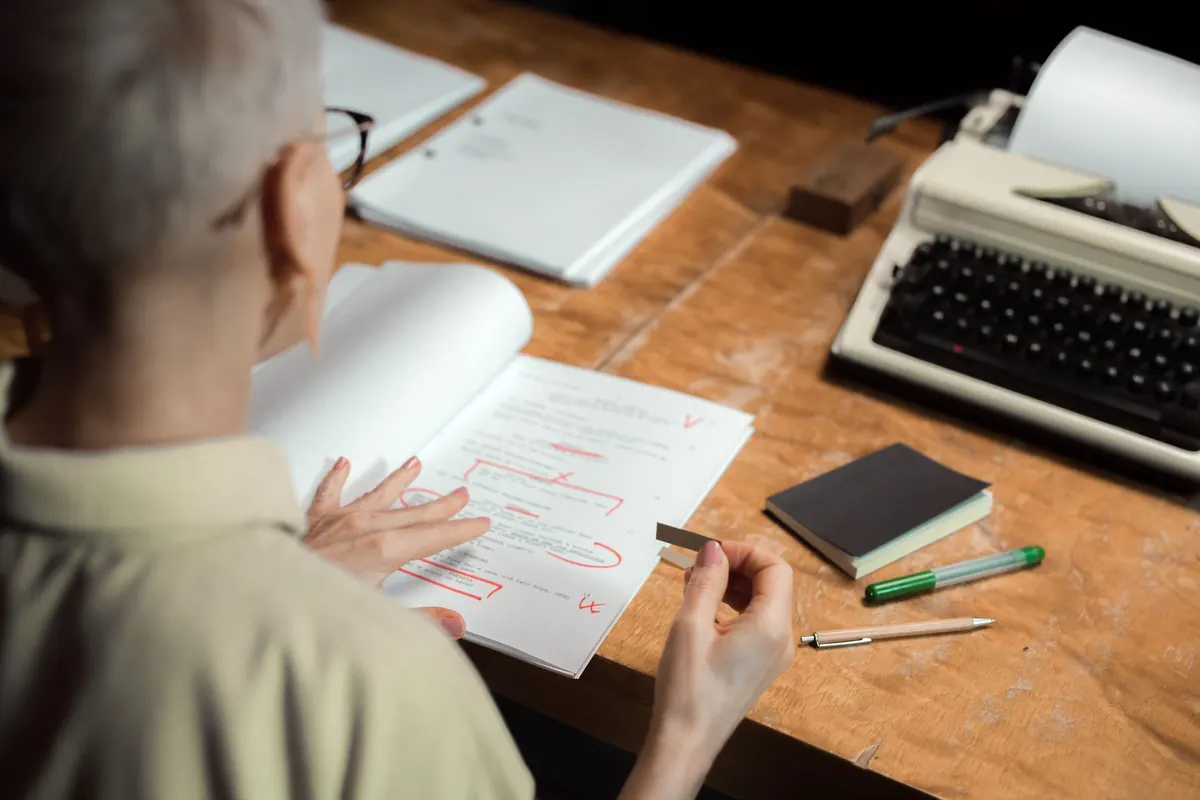
Photo: Markus Winkler / Pexels